

Gravel Driveway vs Asphalt in Michigan: The Honest Deep Dive
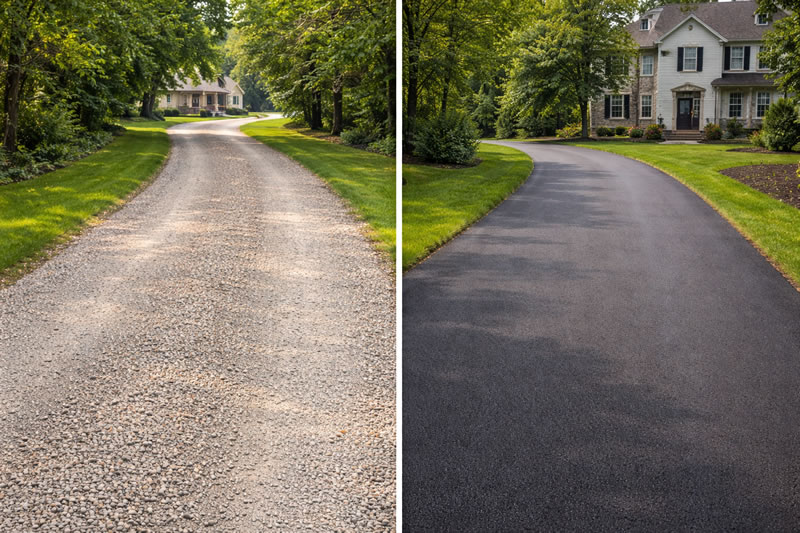
If you live in Michigan, your driveway is not just a surface. It is a structural system that has to survive heavy snow, spring thaw, saturated soils, plow traffic, and repeated freeze-thaw cycles. The conversation about gravel versus asphalt is usually framed around appearance or upfront cost, but in Michigan, that is not where the real story is.
The real story is water.
Both gravel and asphalt fail for the same underlying reason. Water infiltrates the structure, the ground softens, freeze-thaw expands trapped moisture, and the base begins to move. Once the base moves, the surface shows the damage. In gravel, that means ruts and potholes. In asphalt, that means cracks and eventually potholes. The top layer is only as strong as what is underneath it.
In Michigan, the cheapest driveway over the long term is the one that keeps water moving off of it.
When homeowners compare costs, gravel usually appears to win upfront. Gravel installations are generally less expensive than asphalt paving, especially when the existing base is still intact and drainage conditions are decent. However, that simple comparison can be misleading. If a property requires excavation, reshaping, installation of geotextile fabric, thicker stone sections, or drainage correction, the cost of a proper gravel build increases significantly. It may still come in below asphalt, but it is no longer a “cheap” solution. It becomes a structural correction project.
Asphalt typically costs more per square foot in Michigan, particularly when installed correctly with proper base preparation. The mistake many homeowners make is pricing asphalt without pricing proper base repair underneath it. If asphalt is installed over weak clay soils or a poorly drained structure, it may look great initially, but begin cracking far sooner than expected. The surface can only mask base failure for so long.
Winter performance is another area where the differences become clearer. Asphalt offers a smooth finish and is easier to plow clean. However, it is highly vulnerable to freeze-thaw damage if water penetrates cracks. Small hairline cracks allow moisture in. That moisture freezes, expands, and widens the cracks. Over multiple seasons, this process accelerates deterioration. Asphalt also requires ongoing maintenance, such as crack sealing and periodic sealcoating, if you want to maximize lifespan.
Gravel behaves differently. It does not crack in the same way asphalt does. Instead, it shifts. When saturated, it can rut. When traffic patterns repeat over a loose surface, it can develop washboarding. When water pools in low areas, potholes form. The advantage gravel offers is repairability. A properly built gravel driveway can be reshaped and restored. Material can be redistributed. The crown can be re-established. Drainage can be corrected without full removal. When maintained correctly, gravel can function for decades because it can be reworked rather than replaced.
Maintenance expectations are very different between the two surfaces. Asphalt maintenance tends to be less frequent but more material-specific. Cracks must be sealed. Surface sealcoating helps protect from oxidation and water infiltration. Edges near garage slabs and road connections often require attention. Over time, sections may require patching.
Gravel maintenance is more about shape and structure. A gravel driveway may need periodic regrading to pull material back toward the center and restore crown. Additional stone may be required over time, particularly after harsh winters. The key is not simply adding gravel to potholes but correcting the reason those potholes formed. Water management and proper pitch determine whether a repair will last.
Load handling is another misunderstood factor. Many assume asphalt is automatically stronger. In reality, load performance depends on base preparation. A properly built gravel driveway with adequate thickness and compaction can support heavy trucks, trailers, and equipment. Asphalt can deform under heavy loads if it is thin or sits on a soft base. The surface choice matters less than the structural build beneath it.
Traction is also worth considering. Gravel often provides better natural traction in winter conditions, although plowing must be done carefully to avoid displacing stone. Asphalt plows cleaner but can become slick and rely more heavily on salt or sand for winter grip.
Ultimately, the decision between gravel and asphalt in Michigan should begin with three questions:
- Where is the water coming from?
- Where is it supposed to go?
- And does the current driveway structure allow it to get there without saturating the base?
Homeowners often pick the surface first. The correct order is drainage planning, base evaluation, structural correction if necessary, and then surface selection. In Michigan’s climate, freeze-thaw is relentless. Water always wins. The driveway that survives is the one designed to manage it.
If you are evaluating whether to restore a gravel driveway or invest in asphalt, the most important step is a site-specific assessment. Surface color matters less than structural integrity. When drainage and base are correct, both gravel and asphalt can perform well. When they are not, neither one will.